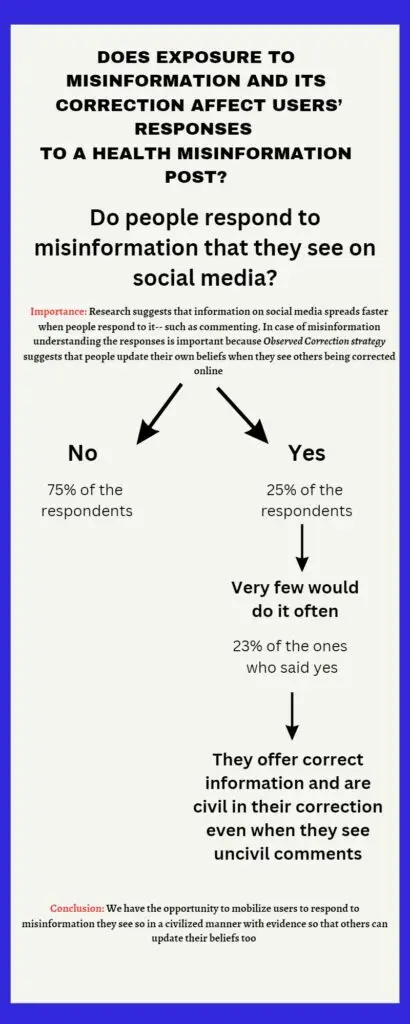
Research shows that misinformation can spread quicker when users “like”, “share” or “reply” to them and observational correction is a promising strategy for mitigating the effects of misinformation. However, less is known about what leads people to respond to misinformation. This study thus analyzes how exposure to misinformation and correction on Twitter about unpasteurized milk affects people’s likelihood of responding to misinformation and also analyzes the content and tone of the responses. To assess the responses we identified key variables such as whether or not participants offered a reply, their position of reply (pro, anti or neutral), position of reply regarding raw milk nutrition, raw milk safety (correct or incorrect) and tone of reply (civil or uncivil). Results show that people are unlikely to respond and do not provide substantive comments even when prompted– exposure to other corrections did not increase their likelihood of replying. Of the small population that said they would respond, most showed reluctance to reply often but those that did do so offered correct information especially when they saw other corrections. They typically used a civil tone even in the face of uncivil corrections. This finding of the reluctance of people to correct misinformation presents an opportunity to tap into the potential and promote mobilization of users to have less civilized discussions.